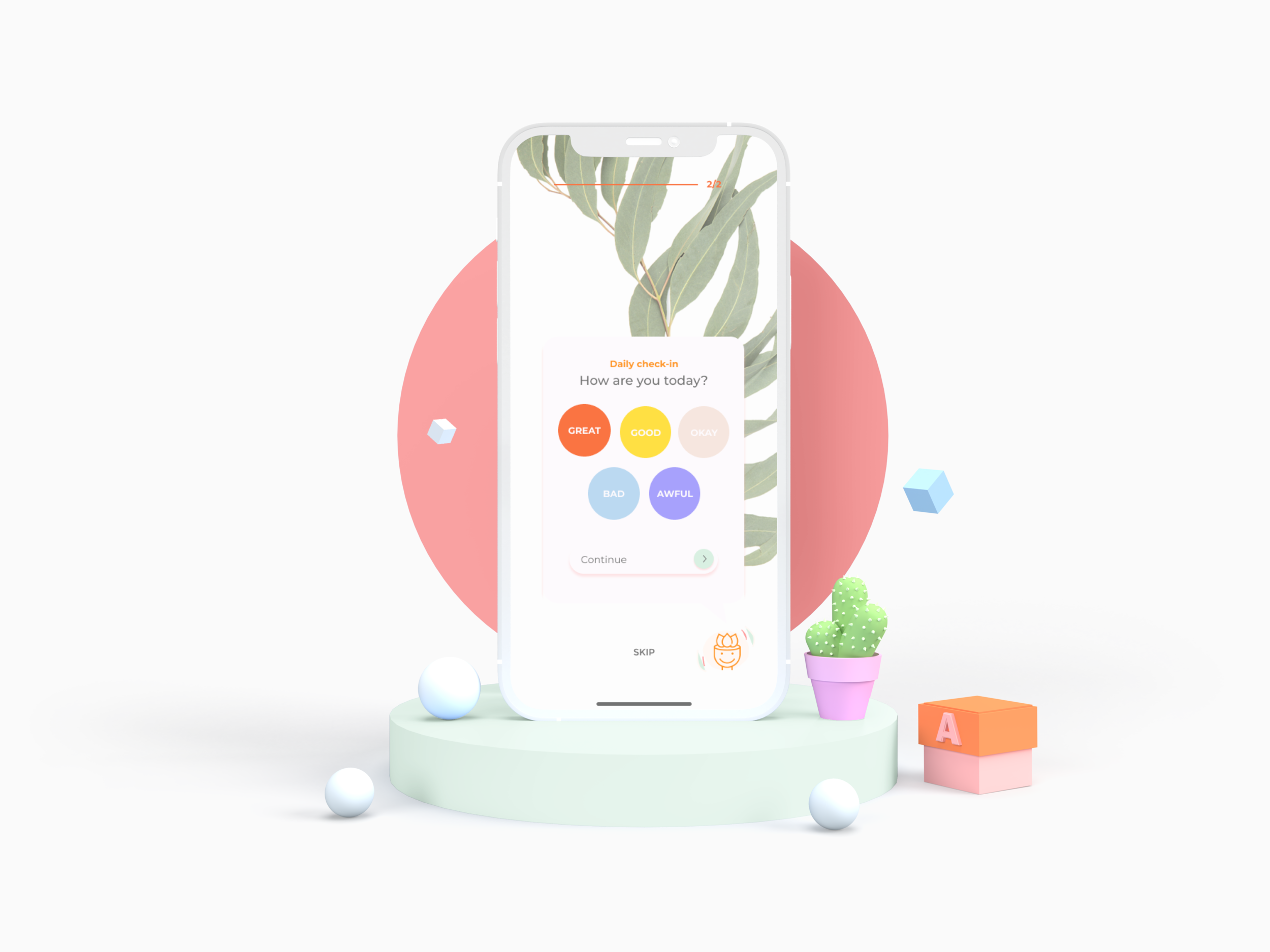
LoveYa - an IOS application in the world of wellness
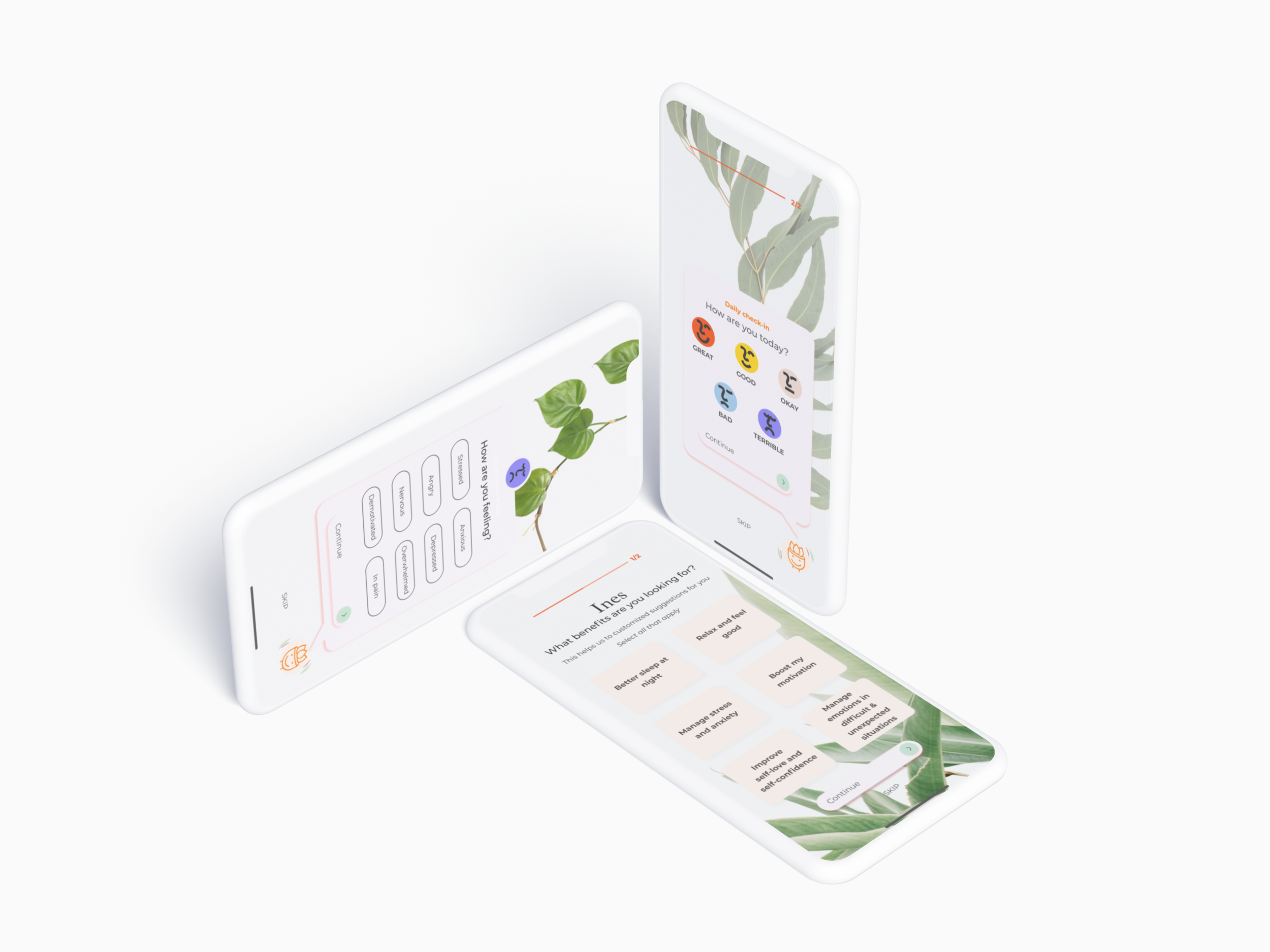
How LoveYa was created
Despite the vast availability of personal metrics and health apps, people continue to struggle to maintain a healthy lifestyle.
For this project i had to conduct user research to understand people's relationship with mental, physical, and emotional well-being in order to develop a tool that will drive them to action.
i wanted to create a meditation application that is caring and friendly for our futur users.
Market Research
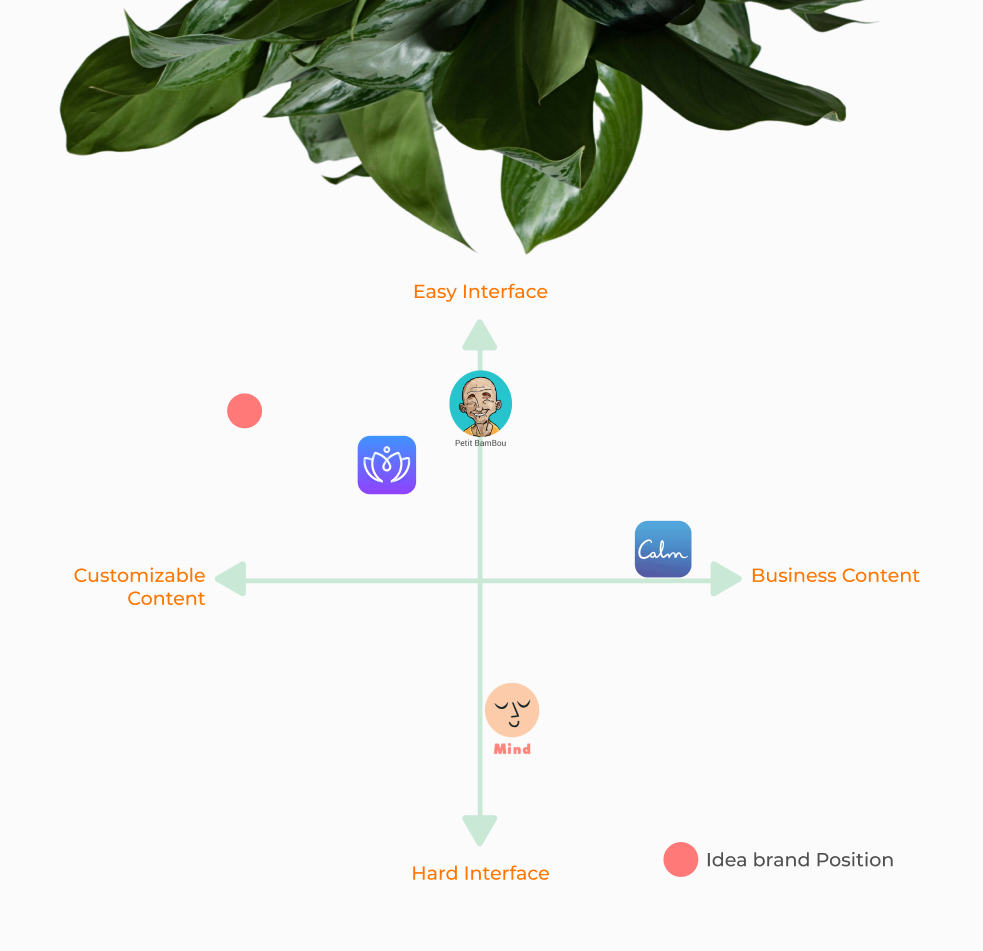
After a market study, 4 competitors stood out, Petit Bamboo, Calm, Meditopia and Mind.
These applications are quite complete, but there are some issues.
As a matter of fact either they have a very busy design, with a lot of informations, or an unclear user flow or the content is mainly available with a premium subscription.
Or how to get even more stressed out before you can relax.
In a second step i started a quantitative and qualitative analysis. Several very important pieces of information emerged from the survey results.
The main idea i had was to make LoveYa as customizable as possible. But first i had to make sure that potential users would be willing to share personal informations like their moods or feelings after a meditation session.
After that i interviewed 4 people, and use the affinity diagram statement to organize and cluster ideas and data to effectively develop a solution that meet the needs and expectation of users.
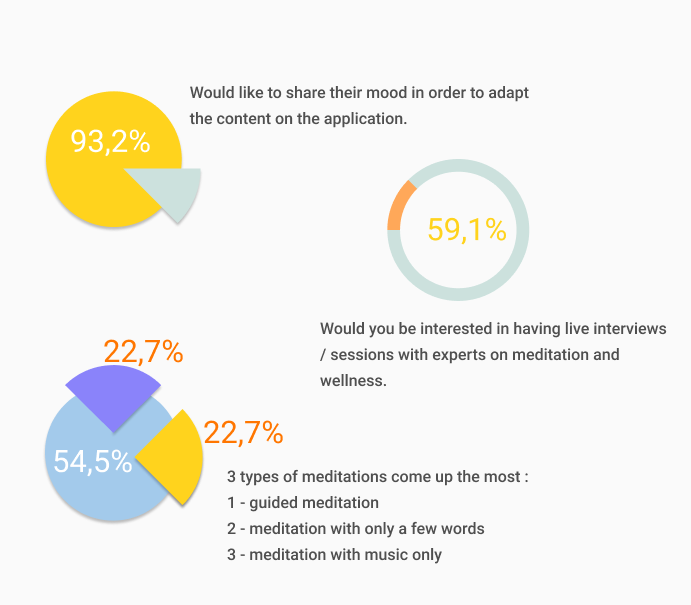
100 person - 82 % Female / 17% male - 82 % between 25-40 years old
-
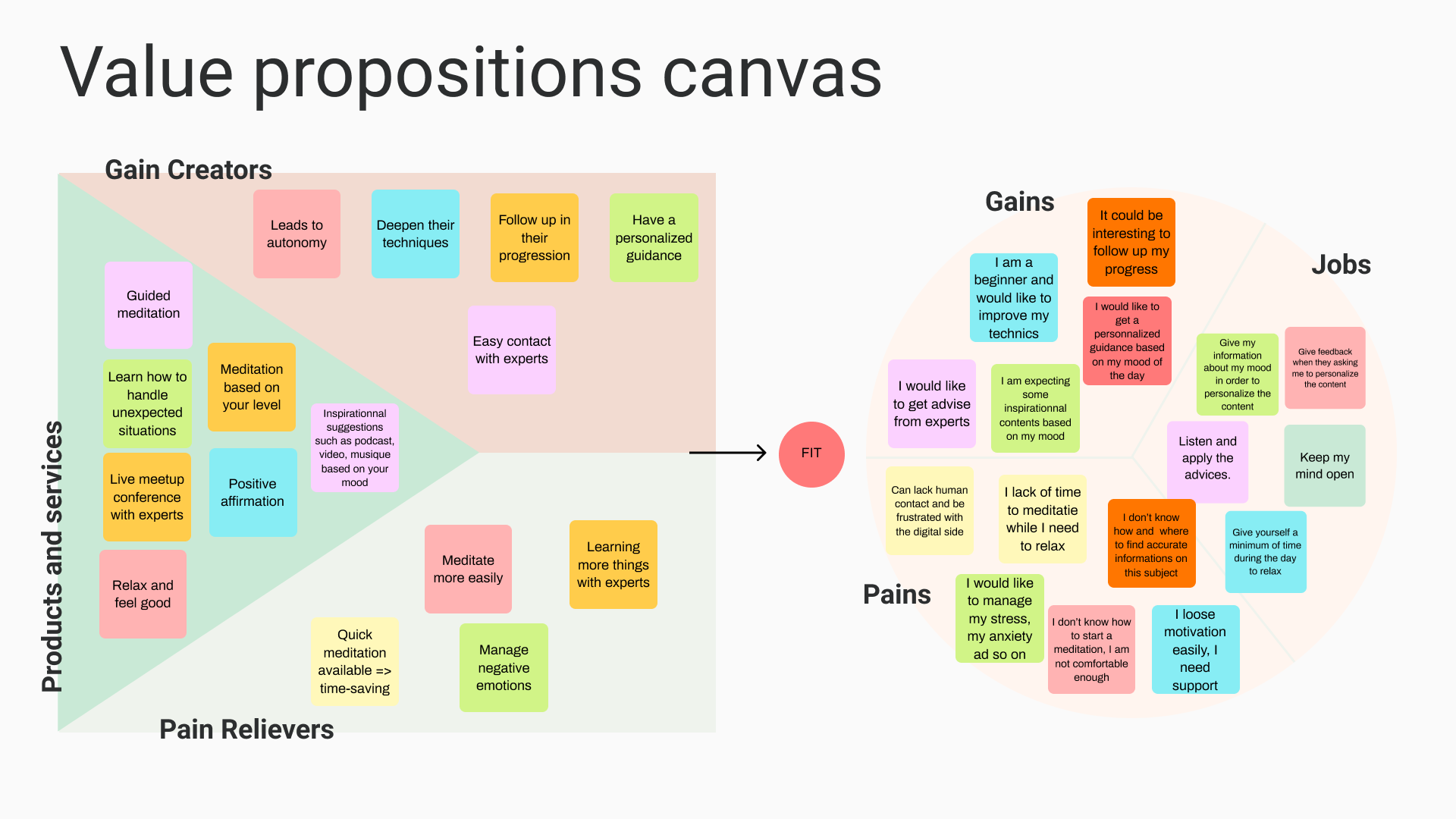
To work deeper on the users needs, but also to define the services that are most in line with users’ expectations. I have worked with the value proposition canvas method.
This allowed me to validate the targets as well as the needs, problems and hopes of our clients.
-
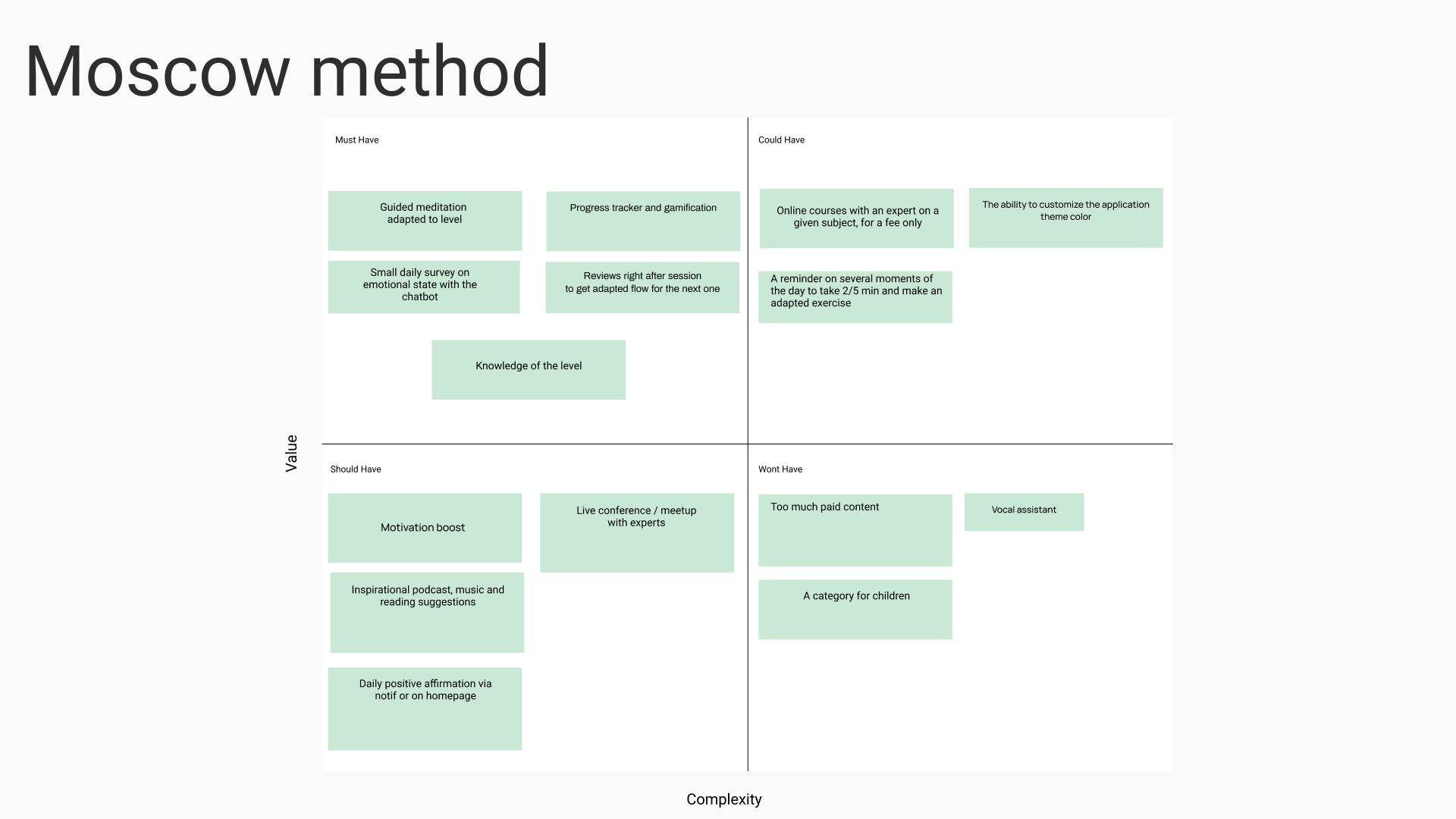
And then I used the MOSCOW technique to organize the features that appeared.
Meditation, serenity and self-love are within a reach.
MVP
After all this research i was able to establish our Minimum Viable Product.
The goal of LovaYa will be to propose anytime and anywhere a friendly and caring emotions virtual coach that is fully adaptable to the need of the users and their goals at that precise moment.
Create a chatbot as a personnal assistant that cares about how the user feels during the day and allows them to define what they needs by suggesting personnalized contents.
This includes specific features such as :
Guided meditations adapted to the user’s level
A possibility to review the session
Progress tracker and gamification.
By ensuring that these things are available, the user will be able to manage his emotions in all circumstances.
Contexte

Meet Ines, my primary persona for LoveYa.
To define the target user, I developed the profile of a woman in her thirties, balancing a demanding career and motherhood.
She experiences high levels of stress, struggles with sleep, and lacks moments of real pause throughout her day.
Her need is clear: an easy-to-access activity that fits into her tight schedule and helps her relax and improve her sleep quality.
Design iterations
This is a typical example of how Ines might use LoveYa.
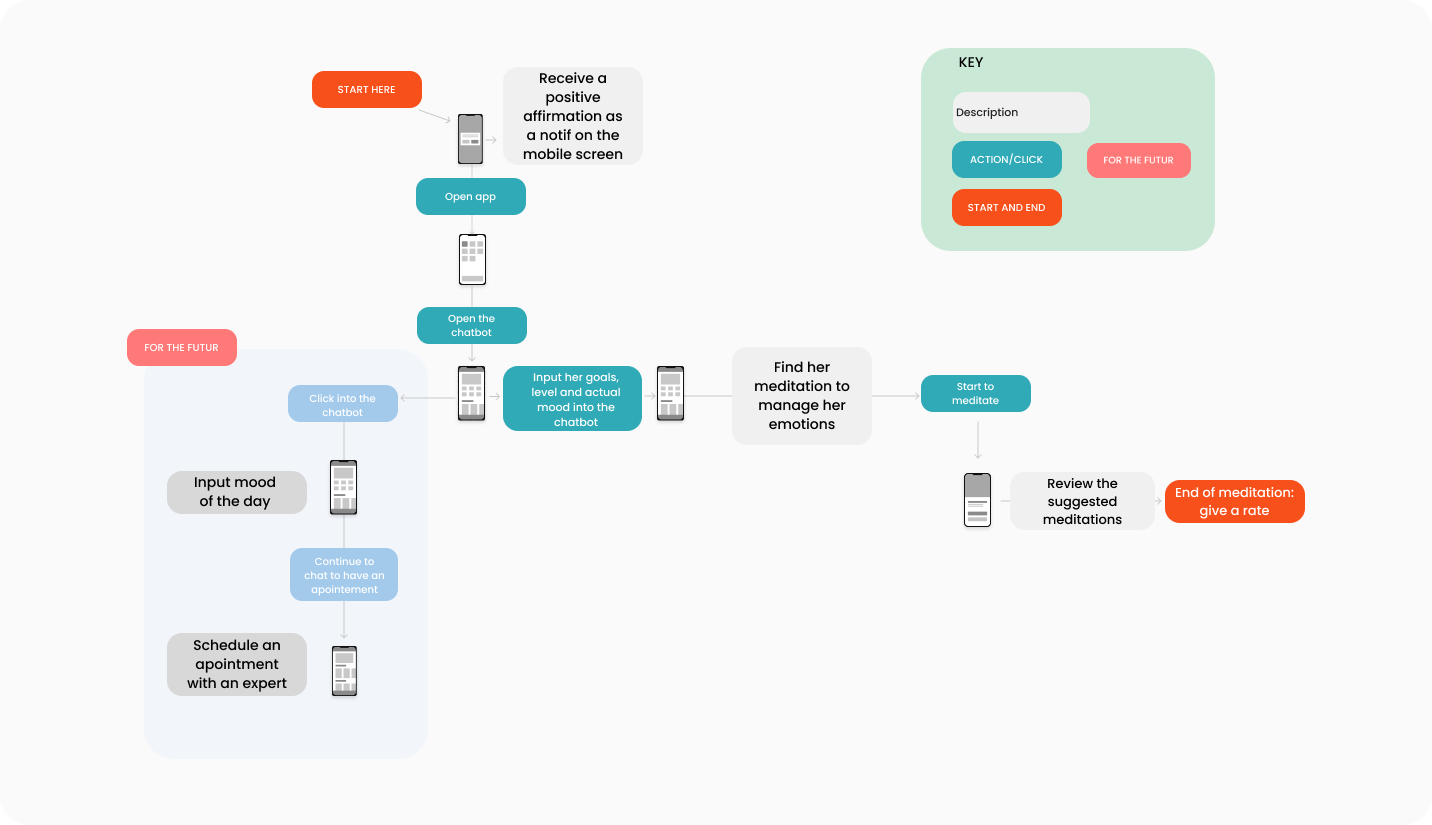
This morning Ines had no time, it was a rush to get the kids to school, they had trouble waking up and so did she.
The stress and the tiredness already started to accumulate at the beginning of the day.
She arrives at work, there are a lot of urgent requests to process, she feels overwhelmed. She starts to feel the need to calm down and find a solution to relax. She think about LoveYa.
She opens the application and fills in her current mood status in order to have content adapted to her situation. Her virtual coach suggests several types of meditation depending on her mood, her level and the time.
She chooses a short guided meditation. She is now relaxed and satisfied and can if she wishes give feedback to improve the next meditation selections.

Following the user flow we started and tested the sketches and then we arrived at the mid-fidelity tests.
Several things were corrected…
Users wanted to be introduced to the chatbot to know its existence before using the application.
For accessibility matter, the moods tags has to be highlighted with text.
On the “Thank you” pop-up, we put informations about the gamification to motivate the users in their progress.
After the meditation the rating pop-up is now join with a caring message.
After making a mood board and choosing the color palette.
We decided to give life to our mood and meditation coach Aï
(which means love in Japanese).
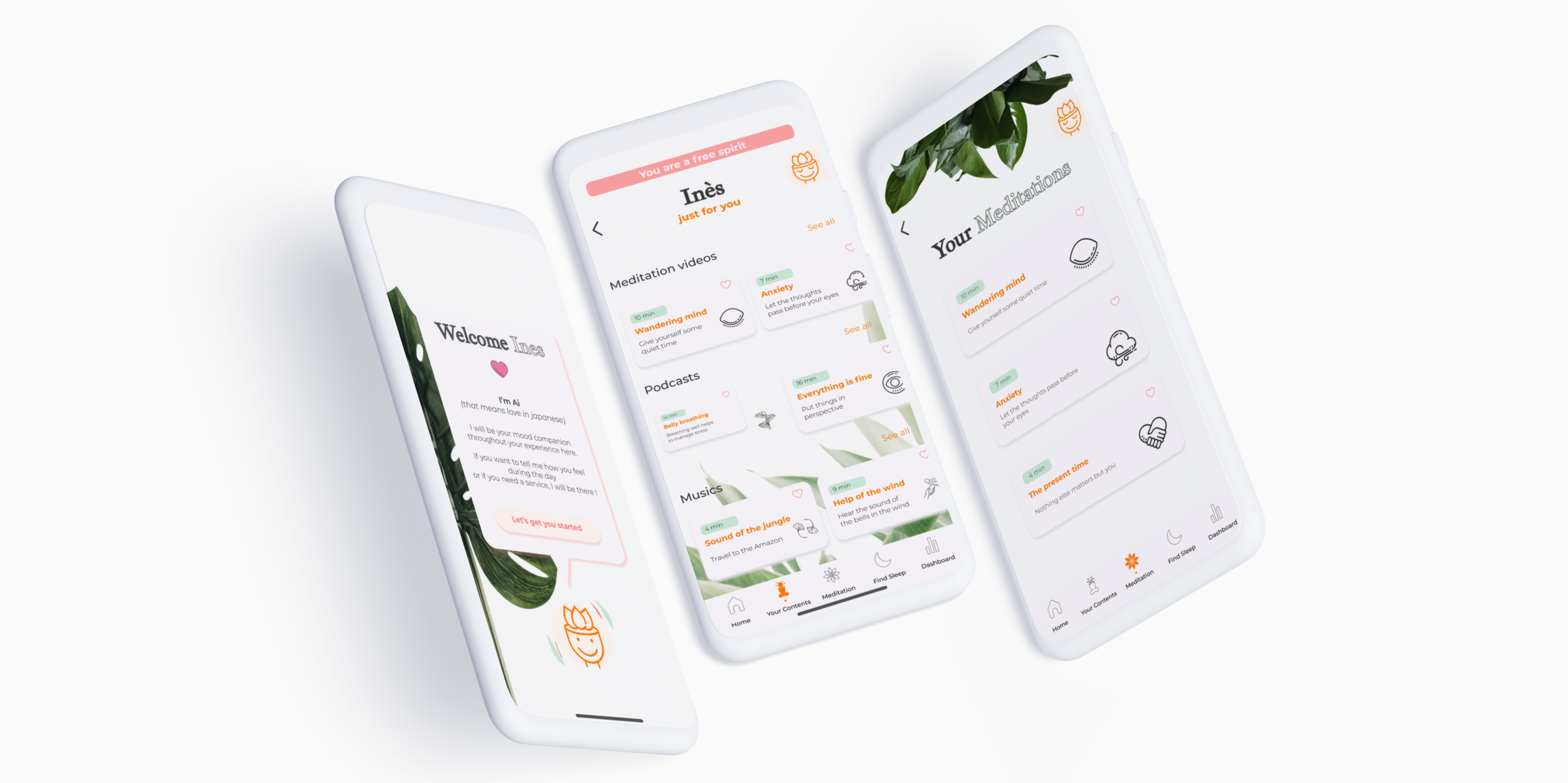
Here is the Hi-Fidelity prototype of LoveYa